
BrightCore guides
Medical Office Cleaning and High-Touch Surface Sanitation
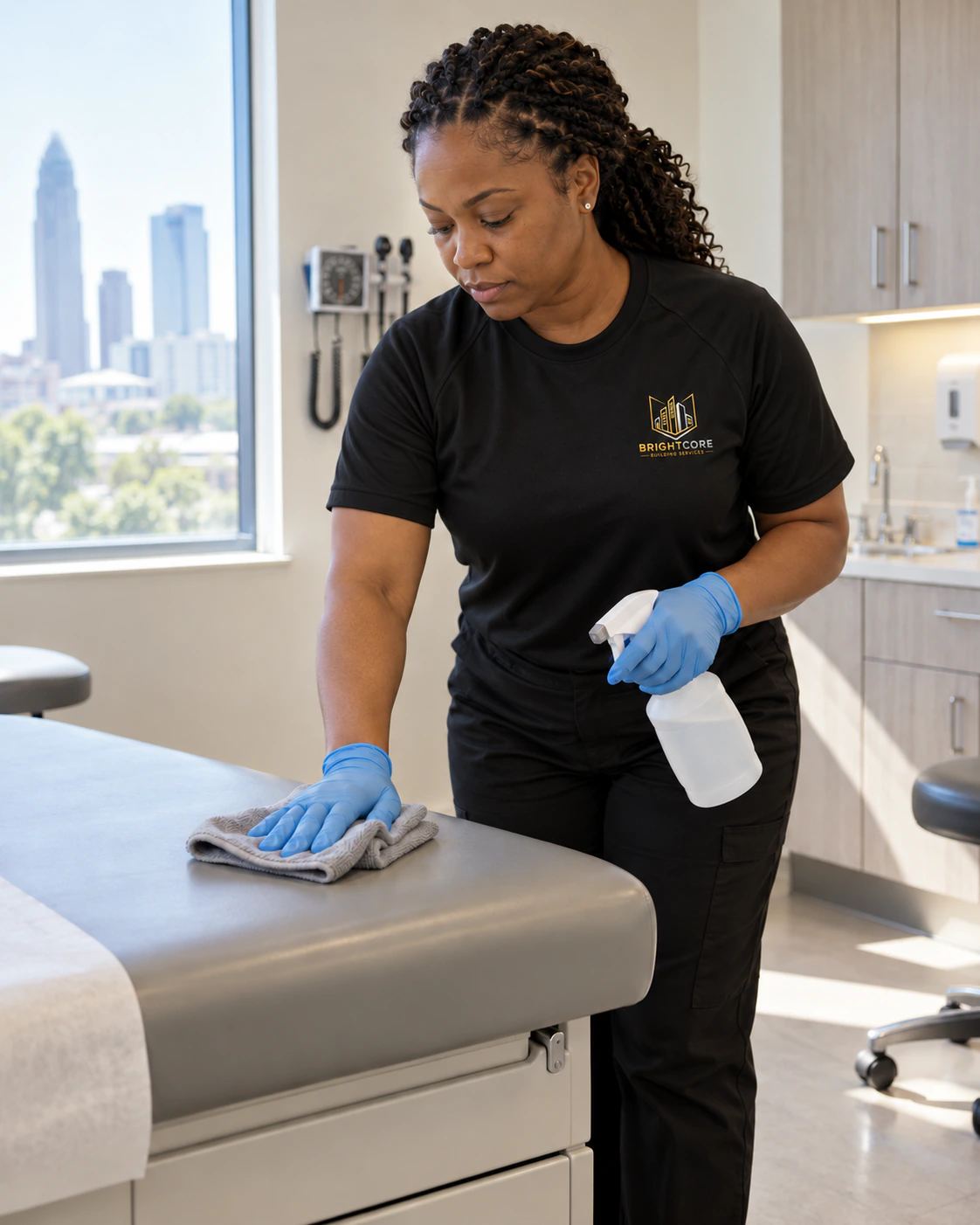
Medical office cleaning should follow the practice’s environmental cleaning protocols, with defined responsibility for patient areas and frequently touched surfaces. Cleaning, sanitizing and disinfecting are different tasks, and product instructions matter. An after-hours visit does not replace clinical staff duties between patients. BrightCore cleans medical and dental offices under the practice’s protocols and excludes regulated medical waste, sharps and biohazard cleanup.
By BrightCore Building Services
Published · Last updated
Assign responsibility before writing the checklist
Start with the practice manager or infection prevention lead. Identify waiting areas, restrooms, offices, exam rooms and treatment rooms, then determine who handles each task and when. Clinical equipment, medication areas and procedures need their own approved instructions. Do not treat a general cleaning proposal as authorization to reprocess instruments or medical devices.
The CDC’s core infection prevention practices apply across healthcare settings and include environmental cleaning and disinfection. Use the practice’s adopted procedures to define the contracted scope. BrightCore’s medical office cleaning service is scheduled around patient hours, with responsibilities confirmed for the actual rooms involved.
Identify the surfaces people actually touch
High-touch surfaces depend on the room’s use. Build the list with staff instead of copying a generic office checklist. Observe where patients, clinicians and reception staff place their hands, and distinguish environmental surfaces from clinical equipment. Confirm which areas are cleared and safe for the contracted crew at the end of patient hours.
- Entrance handles, reception counters and approved waiting-area surfaces.
- Restroom handles, faucets and dispenser touchpoints.
- Light switches and accessible door hardware in included rooms.
- Approved environmental surfaces near patients, as defined by practice protocol.
- Shared staff-area counters and other agreed touchpoints.
- Equipment exteriors only when the practice provides appropriate instructions and authorization.
Use precise language for cleaning and disinfection
Removing soil and applying a disinfectant are different steps. A visibly clean surface is not proof that a disinfection process was completed. The practice should specify where disinfection is needed, which products fit the intended use and how completion is documented.
The CDC’s healthcare core practices call for routine and targeted environmental cleaning, with more frequent attention to surfaces near patients and those touched often. They also direct facilities to follow manufacturers’ instructions. Community-office cleaning advice should not be substituted for these healthcare procedures. A nightly contractor visit is one part of the plan, alongside the practice’s tasks during patient care.
Match the product label to the task
For disinfectants, the EPA’s selected registered disinfectants page explains intended-use sites, pathogen claims and directions. Select through the practice’s protocol and the product label. An entry on a pathogen-specific list does not mean a product works against every organism or fits every surface.
Contact time is part of the process: the surface must remain visibly wet for the label’s specified interval. Confirm dilution, compatibility and any follow-up steps rather than treating a spray-and-immediate-wipe action as sufficient. Record the product information where responsible staff can consult it, and discuss material concerns before work begins.
Keep chemical safety and clinical boundaries explicit
The OSHA and NIOSH cleaning-chemical information sheet covers safer handling, product information and worker protection. The OSHA chemical hazards overview also explains hazard communication. Discuss approved storage, ventilation and the protective measures required for the actual products.
Separate environmental cleaning from blood or body-fluid incidents, sharps, regulated waste and device reprocessing. BrightCore does not handle regulated medical waste or biohazard cleanup. Practice staff should secure these materials and use their approved specialist processes. If an unexpected hazard is found, stop the affected task and notify the designated practice contact rather than expanding the scope informally.
Document the visit without exposing patient information
Define access, restricted rooms and the end-of-visit review with the practice. Clear paperwork and protect patient information before the crew arrives. BrightCore uses electronic checklists, with printed copies available on request. Photos are opt-in; a practice can decline them, and any agreed photography must respect restricted areas and the practice’s privacy instructions.
The medical and dental office service plan explains quoting around exam rooms, treatment rooms and shared areas. To request a quote, provide room counts, approximate size, patient hours and the practice contact responsible for cleaning protocols. The final scope should name responsibilities and exclusions without promising sterilization, infection-free outcomes or a medical-grade certification.
Questions and answers
Does after-hours cleaning replace between-patient cleaning?
No. The practice assigns between-patient and clinical duties under its protocols. Contracted after-hours environmental cleaning has its own defined scope.
Does BrightCore remove sharps or regulated medical waste?
No. Regulated medical waste, sharps and biohazard cleanup are outside BrightCore’s direct cleaning scope and must follow the practice’s approved specialist arrangements.